· Atlanta Catering Events Team
Asian Fusion Catering: Sushi, Noodles, and More
"Asian fusion" covers a lot of ground. A sushi station, a noodle bar, Korean-style barbecue skewers, and Thai-inspired curries can all sit under the same menu heading, even though they come from distinct culinary traditions. For hosts searching for asian catering near me or sushi catering specifically, it helps to understand what's actually on offer before you book, since "Asian fusion" means something different from caterer to caterer.
This guide breaks down the formats, popular menu components, and planning logistics for Asian fusion catering, so you can build a spread that feels cohesive rather than like a scattershot sampler.
What "Asian Fusion" Actually Means on a Catering Menu
In a catering context, Asian fusion typically means a curated menu that draws from multiple East and Southeast Asian culinary traditions (Japanese, Chinese, Thai, Korean, and Vietnamese influences most commonly), combined thoughtfully rather than served as an unrelated buffet. A well-designed fusion menu picks complementary flavors (soy, ginger, lemongrass, sesame, chili) and formats that work together logistically, rather than trying to represent every regional cuisine at once.
Popular Formats for Asian Fusion Events
Sushi Stations
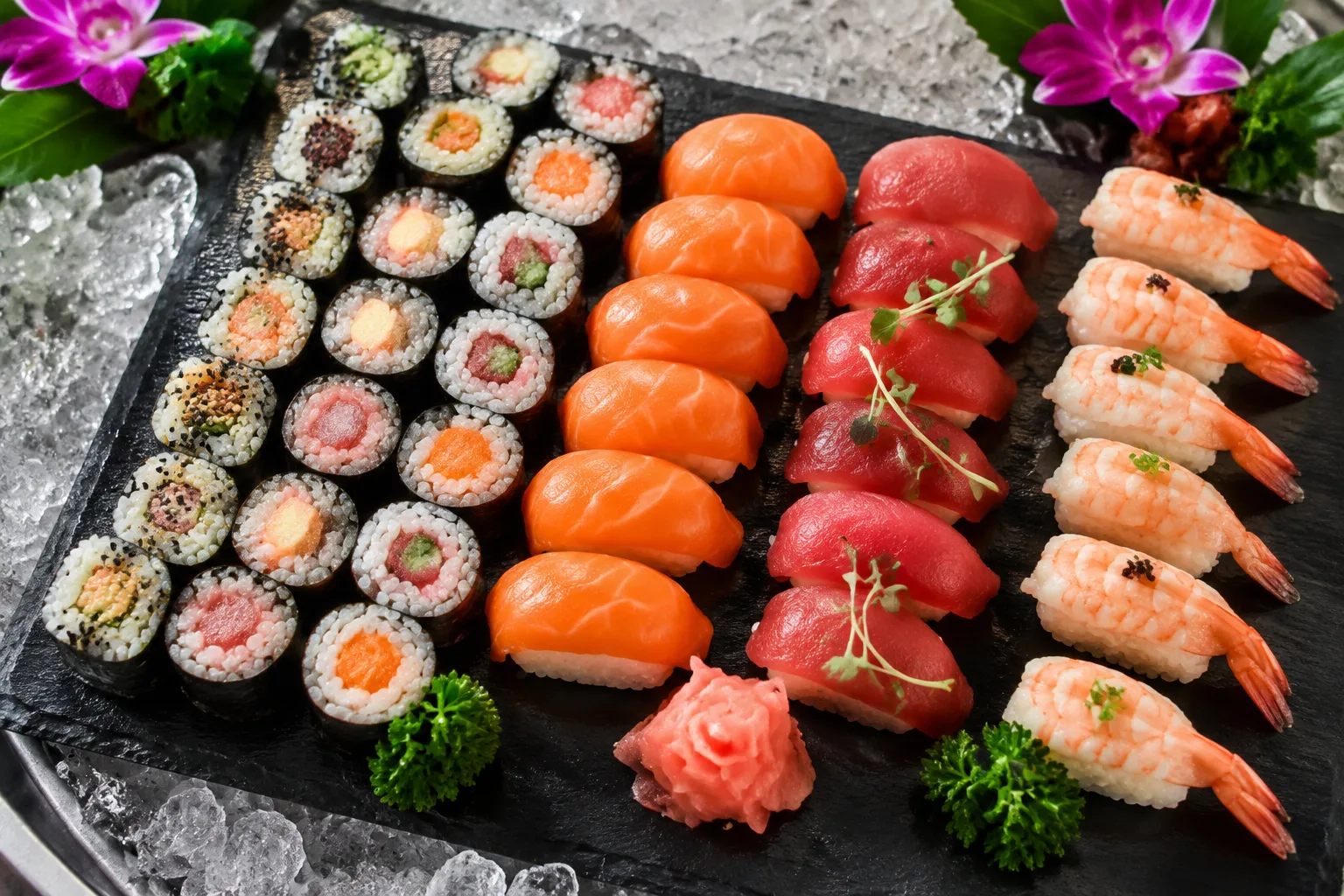
A sushi station is one of the most requested elements for cocktail hours and special private events. Options range from a pre-rolled display of maki and nigiri arranged on a chilled platter to a staffed rolling station where a chef prepares rolls to order in front of guests. Vegetarian rolls, cooked-only rolls (shrimp tempura, eel), and classic raw options can all be included on the same station to accommodate different comfort levels.
Noodle Bars
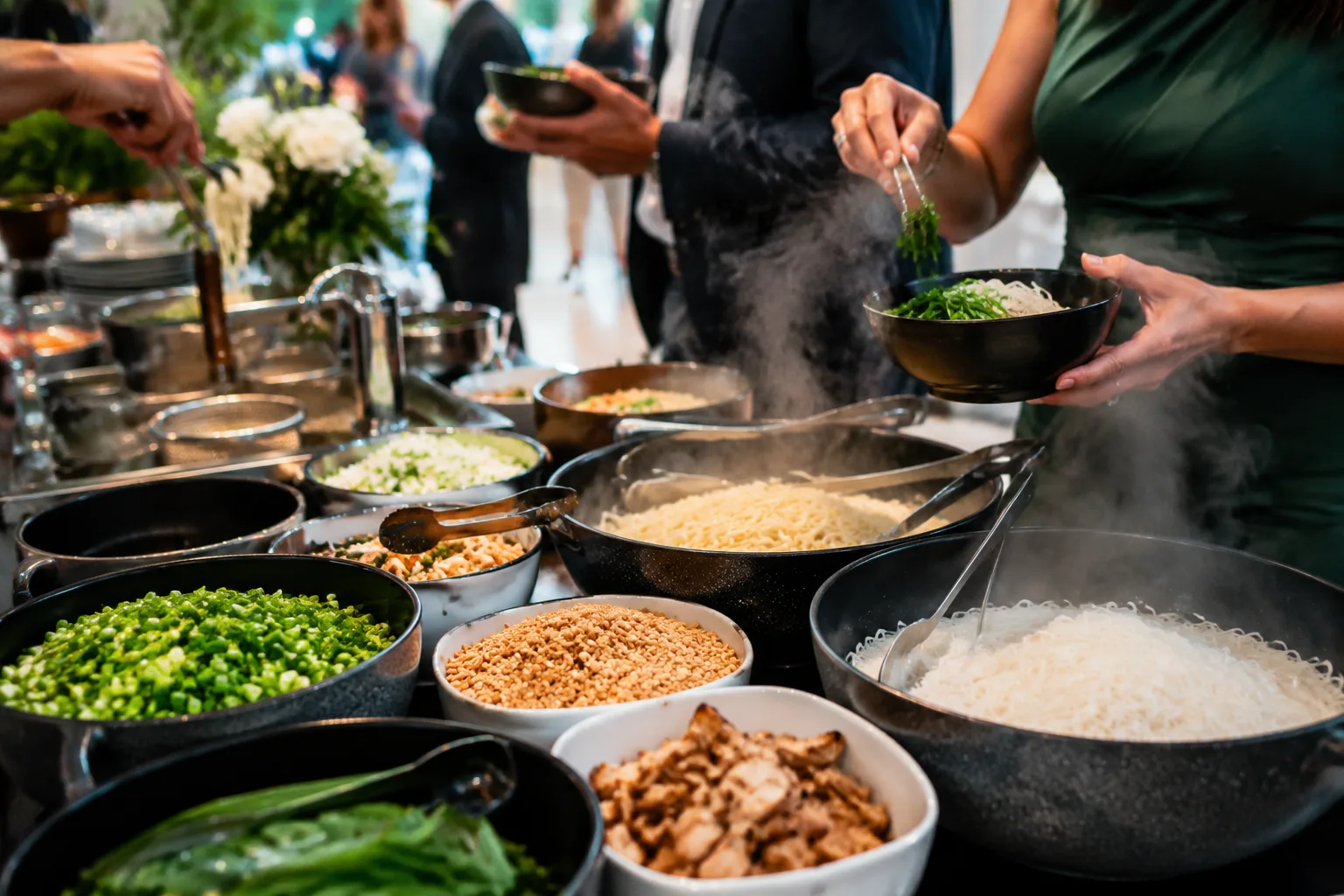
A noodle bar lets guests choose a base (lo mein, pad thai rice noodles, or ramen) and toppings (grilled chicken, tofu, vegetables, scallions, crushed peanuts). This format works well for larger groups because it's fast to serve and easy to make vegetarian- and gluten-free-friendly by keeping components separate.
Skewers and Small Plates
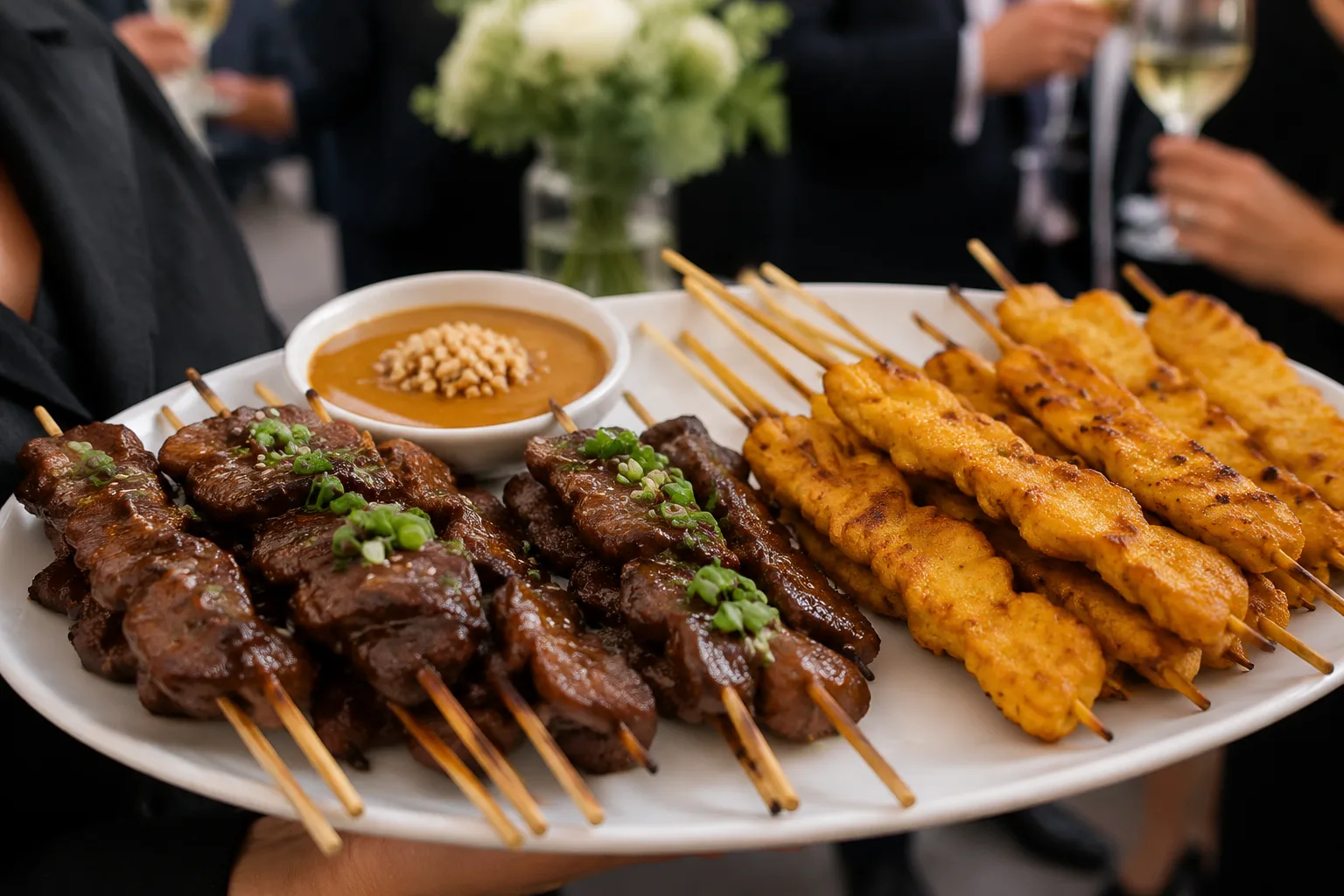
Korean-style bulgogi skewers, Thai satay with peanut sauce, and Vietnamese spring rolls are popular passed appetizers for cocktail hours, since they're easy to eat standing up and offer a lot of flavor variety in a small footprint.
Family-Style Mains
For seated dinners, family-style service lets the table share dishes like General Tso's-style chicken, garlic green beans, fried rice, and a whole steamed fish, echoing the shared-plate tradition common across many Asian dining cultures.
Sample Asian Fusion Menu Lineup
| Course | Example Dishes | Notes |
|---|---|---|
| Passed Appetizers | Vegetable spring rolls, chicken satay skewers, edamame dumplings | Easy to eat while mingling |
| Sushi Station | California rolls, spicy tuna, vegetable maki, nigiri selection | Can be staffed or pre-plated |
| Noodle Bar | Pad thai, lo mein, sesame noodles with build-your-own toppings | Naturally accommodates dietary swaps |
| Family-Style Mains | Orange chicken, garlic ginger tofu, steamed bok choy, fried rice | Shared platters at each table |
| Dessert | Mochi selection, mango sticky rice | Light finish to a flavor-forward meal |
Logistics: What to Know Before You Book
Sushi and other raw-fish components require careful temperature control, so ask your caterer how the fish is transported and held on-site. Reputable caterers use chilled transport and ice-bedded displays and will discuss their food-safety process without hesitation. If you want a live rolling station rather than pre-made platters, confirm that separately, since it typically requires a dedicated staff member and additional prep space near the service area.
Spice level is another detail worth flagging in advance. Thai and Korean dishes can range from mild to quite spicy, and a good caterer will offer a mild default with hot sauce or chili oil on the side rather than guessing at your guests' tolerance.
"A good fusion menu doesn't blend everything into one flavor. It lets each dish keep its own identity while still feeling like part of the same meal."
— Atlanta Catering Events Team
When Asian Fusion Catering Is a Good Fit
- Cocktail-style receptions: Skewers, dumplings, and a sushi station translate well to a standing, mingling format.
- Corporate events wanting something distinct from standard buffet fare: A noodle bar or sushi station reads as more elevated than a typical sandwich spread.
- Guests with varied dietary needs: Component-based formats like noodle bars make it easy to offer vegetarian, gluten-free, and dairy-free options without a separate menu.
- Hosts who want a visually striking spread: Sushi platters and colorful noodle bars photograph well and stand out on a buffet line.
Pricing Framing
Asian fusion menus price similarly to other specialty cuisine catering, with sushi stations generally landing at the higher end due to the cost of fresh fish and the skill required to prepare it properly. A staffed rolling station costs more than a pre-plated platter because you're paying for both the ingredients and the on-site labor. As with any catering format, final pricing depends on guest count, protein selection, and whether you choose drop-off, buffet, or full-service staffing. Full-service catering carries a 10-guest minimum sitewide, while smaller sushi and appetizer platters can often be arranged as drop-off for smaller gatherings.
Frequently Asked Questions
Is the sushi served at catered events raw or cooked?
Both. Most sushi stations include a mix of raw options like nigiri and spicy tuna alongside cooked rolls such as shrimp tempura and vegetable maki, so guests with different preferences all have options.
Can Asian fusion menus be made fully vegetarian?
Yes. Vegetable sushi rolls, tofu-based mains, vegetable spring rolls, and noodle dishes without meat can make up an entirely vegetarian spread without feeling like an afterthought.
Do I need a staffed sushi chef, or can rolls be pre-made?
Either works. Pre-made platters are more budget-friendly and simpler logistically, while a live rolling station adds an interactive, higher-end feel but requires additional staffing and setup space.
How spicy is a typical Asian fusion menu?
Most caterers default to mild-to-medium spice levels with hot sauce or chili oil served on the side, so guests can adjust to their own taste rather than having heat baked into every dish.
Is Asian fusion catering a good fit for a wedding reception?
It can be, especially for couples who want a menu that feels different from standard wedding fare. A sushi station during cocktail hour paired with a more traditional plated or buffet dinner is a common hybrid approach.
What's the minimum guest count for a sushi station?
This varies by caterer and format. Smaller sushi platters can often be arranged as drop-off for intimate gatherings, while a staffed rolling station typically makes more sense for larger events given the fixed labor cost involved.
Plan Your Asian Fusion Menu
Whether you're picturing a full sushi station, a build-your-own noodle bar, or a family-style spread of shared plates, Atlanta Catering Events can help you build a menu that keeps each cuisine's identity intact. Take a look at our Asian cuisine menu or browse our full catering menus for more options, then contact our team to start planning.
Explore Private & Social Event Catering