· Atlanta Catering Events Team
Why Buffet Catering for Private Events Is Making a Comeback
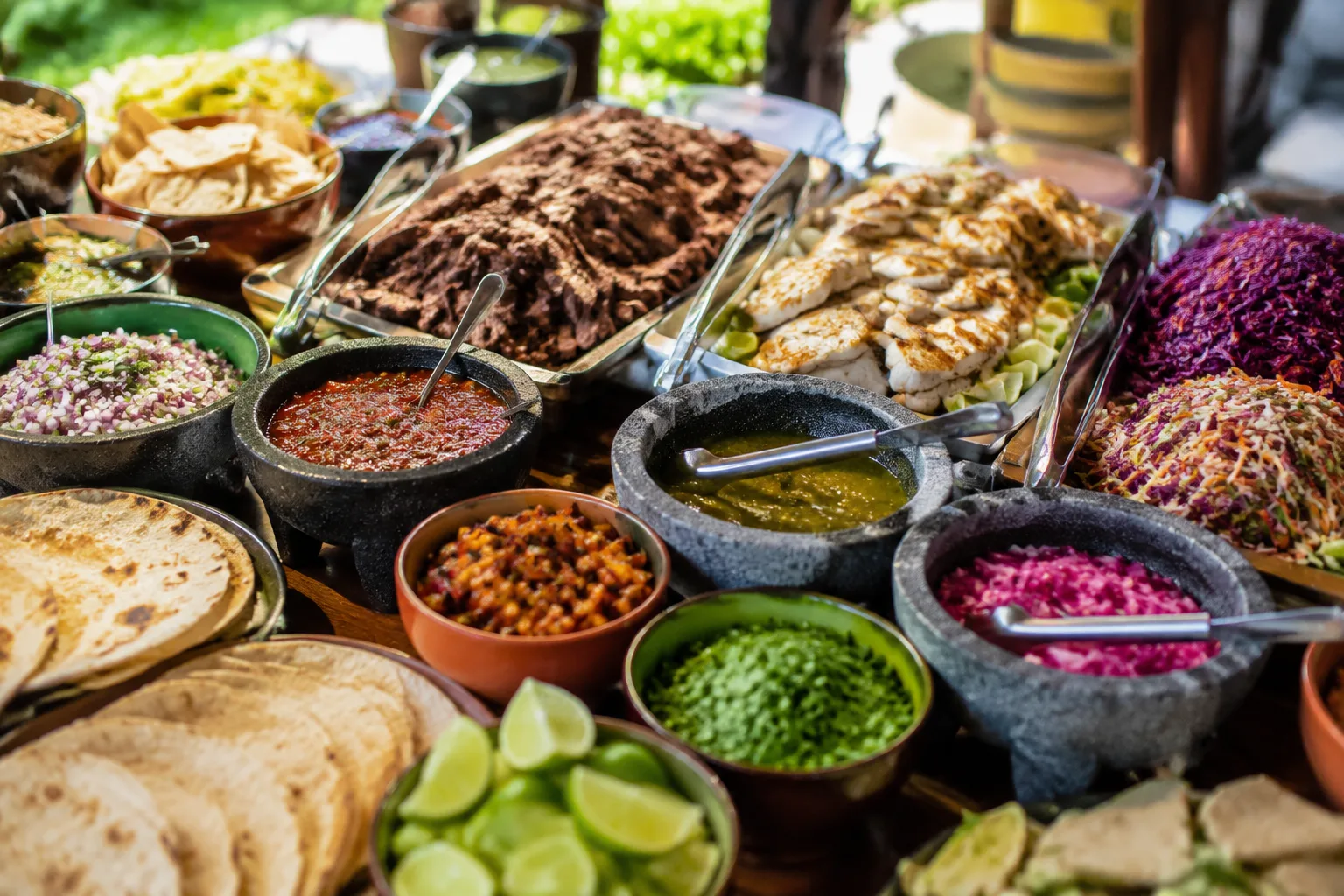
For years, "buffet" was shorthand for steam-table trays, sneeze guards, and food that had been sitting under a heat lamp since noon. That reputation was earned honestly at a lot of budget banquet halls, but it no longer describes how a well-run private event buffet actually operates. Across Roswell, Dunwoody, and Johns Creek, we're watching hosts specifically request buffet service for events where a plated dinner used to be the default, because modern buffet design has quietly closed the gap in presentation while keeping the flexibility and value that made buffets popular in the first place.
This piece looks at why buffets got downgraded in people's minds, what specifically changed to reverse that, and how to design one that reads as elevated rather than economical. We'll also cover the traffic-flow and food-safety fundamentals that separate a buffet that runs smoothly from one that creates a bottleneck by the shrimp.
Table of Contents
- How Buffets Got a Downscale Reputation
- What Reversed It: Modern Buffet Design
- Traffic Flow and Line Management
- Temperature and Food-Safety Basics
- How to Make a Buffet Feel Elevated
- Buffet vs. Plated vs. Stations for Private Events
- Planning Checklist
- Frequently Asked Questions
- Conclusion: Designing Your Buffet
How Buffets Got a Downscale Reputation
The stigma traces back to a specific set of habits, not the format itself. Mass-produced buffet food was often prepared hours ahead and held at temperature until it lost texture. Stainless steel chafing dishes lined up in a straight row created long, single-file lines. Labeling was an afterthought, garnish was minimal, and replenishment happened in big batches that sat exposed for extended stretches. None of that is inherent to serving food buffet-style. It's a set of cost-cutting execution choices that happened to become associated with the format.
Once you separate the format from those habits, what's left is simply a self-serve presentation style. And self-serve, done well, has real advantages: guests control their own portions, dietary customization is effortless, and the visual spread itself becomes part of the event's design.
What Reversed It: Modern Buffet Design
Three changes account for most of the shift we've seen in private event buffets over the past several years:
- Chef-attended stations: Instead of guests serving themselves from a static tray, a chef is stationed at key dishes: carving a roast, finishing a pasta, or plating a composed salad to order. This turns a static line into an interactive, restaurant-style moment.
- Better risers and display design: Varying the height of dishes with risers, wooden crates, and tiered stands creates visual depth instead of a flat row of identical pans, which is often the single biggest difference between a buffet that photographs well and one that doesn't.
- Small-batch replenishment: Rather than filling a large chafing dish once and letting it run down over three hours, staff bring out smaller batches more frequently. Food spends less time sitting, which means better texture and appearance throughout the entire service window, not just in the first fifteen minutes.
Traffic Flow and Line Management
A buffet's biggest functional risk isn't the food. It's the line. A poorly planned buffet creates a bottleneck that leaves half your guests standing around holding empty plates while the other half is already seated and eating. Getting the flow right is mostly about layout:
- Dual-sided lines: For any event over roughly 30 guests, splitting the buffet into two identical, mirrored lines on either side of the table (or two separate tables entirely) roughly doubles throughput and cuts wait time significantly.
- Station spacing: Placing the slowest-moving items (a carving station, a made-to-order pasta bar) with extra space around them prevents a backup from rippling down the entire line.
- Separate bread, salad, and dessert tables: Pulling lighter items off the main line onto their own small table reduces congestion at the entrée section, where most of the slow decision-making happens.
- Clear entry and exit points: A line that guests can enter and exit from opposite ends, rather than looping back on itself, prevents crossing traffic near the buffet.
Temperature and Food-Safety Basics
Behind the visual design, a well-run buffet is also a food-safety operation, even if guests never think about it. At a general level, catering staff manage two temperature zones throughout service: hot holding, where cooked items are kept above the temperature threshold where bacteria multiply, and cold holding, where chilled items like salads and seafood are kept below it. Chafing dishes, warming units, and ice baths exist specifically to maintain these zones for the duration of an event, not just at the moment food goes out.
Beyond temperature, professional buffet service includes practical habits like using serving utensils dedicated to each dish (never a shared spoon across multiple items), swapping utensils during long events, monitoring how long any dish has been out, and pulling items that have exceeded a safe holding window rather than letting them sit indefinitely. None of this needs to be visible to guests. It should simply be happening consistently in the background.
How to Make a Buffet Feel Elevated
If you want your buffet to read as a curated spread rather than a cafeteria line, a few design choices do most of the work:
- Garnish with intention: Fresh herbs, citrus, and edible flowers around a dish's perimeter cost very little but change how "finished" the entire table looks.
- Vary height across the table: Mixing tall stands, mid-height risers, and low platters keeps the eye moving and avoids the flat, monotonous look of a traditional steam-table line.
- Label everything, including allergens: Elegant table cards that name each dish and flag common allergens (nuts, shellfish, gluten, dairy) do double duty: they look intentional, and they remove the awkward "what's in this?" conversation for guests with dietary restrictions.
- Add at least one chef-carved or made-to-order element: Even one live station, like a carved tenderloin or a made-to-order grain bowl, signals a level of service above a fully self-serve spread.
- Use real serveware, not the largest pan available: Portion-appropriate serving dishes that get refilled look far better than one oversized pan that's three-quarters empty by the middle of the event.
Buffet vs. Plated vs. Stations for Private Events
| Format | Guest Experience | Best Fit for Private Events |
|---|---|---|
| Buffet | Self-serve, guest controls portions, moderate mingling | Milestone birthdays, family reunions, corporate gatherings with mixed dietary needs |
| Plated | Seated, served course by course, most formal and controlled | Formal anniversary dinners, intimate seated celebrations |
| Interactive Stations | Guests circulate between multiple stations, highest social energy | Cocktail-style parties, engagement parties, open-house style gatherings |
For most private (non-wedding) events, buffet service tends to win on value and flexibility: it accommodates last-minute headcount shifts more gracefully than a plated dinner, and it requires a lower staffing ratio than either plated service or a multi-station setup.
Planning Checklist
"A buffet isn't a downgrade from plated service. It's a different set of trade-offs, and the goal is to design around its strengths instead of apologizing for it."
— Atlanta Catering Events Team
- Confirm your guest count to size the buffet correctly: A buffet designed for 25 feels sparse at 55, and a buffet designed for 65 feels excessive and wasteful at 35.
- Walk the venue to plan line placement: Identify where a dual-sided line can fit without crossing high-traffic paths like restroom access or the entrance.
- Ask how replenishment will be handled: Confirm your caterer plans small-batch refills rather than one large fill at the start of service.
- Request allergen labeling on every dish: This should be standard, not an upcharge, for any buffet serving a mixed group of guests.
- Decide on one or two elevated touches: A carving station or made-to-order element goes a long way without requiring a full plated-service budget.
Frequently Asked Questions
1. Is buffet catering actually cheaper than plated service?
Generally yes, mainly because buffets require a lower staffing ratio than plated dinners, which are typically served by a dedicated server per table section. Food cost itself can be similar; the savings come primarily from labor.
2. How do you keep buffet lines from bottlenecking at larger events?
For events over roughly 30 guests, we typically recommend a dual-sided or duplicate buffet line, along with spacing the slowest stations (like carving) apart from faster-moving items to keep the overall line moving.
3. How long can buffet food safely sit out during an event?
This depends on the dish and how it's being held, which is exactly why professional catering staff actively monitor holding times and temperatures throughout service rather than setting food out once and leaving it unattended.
4. Can a buffet accommodate guests with different dietary restrictions?
Buffets are often the easiest format for mixed dietary needs, since guests select their own portions and can avoid dishes that don't work for them, especially when every dish is clearly labeled with allergen information.
5. What's a chef-attended station, and does it cost more than a standard buffet?
A chef-attended station is any part of the buffet where a chef is actively carving, finishing, or plating a dish for guests in real time, like a carving station or a made-to-order pasta bar. It typically adds a modest labor cost for the dedicated chef but delivers a noticeably more elevated guest experience.
6. How many buffet lines do we need for a 60-guest party?
At that size, a single line usually creates longer wait times. We typically recommend two identical serving lines, or a single line split into two access points, to keep the flow moving smoothly.
7. Do you provide risers, labels, and display styling, or is that extra?
Presentation elements like risers, garnish, and allergen labeling are part of how we design every buffet. They're built into the service, not treated as an optional upgrade.
Conclusion: Designing Your Buffet
A great buffet isn't a compromise on formal plated service. It's its own design discipline, built around flow, temperature control, and visual presentation rather than course-by-course choreography. Done well, it gives your guests in Roswell, Dunwoody, or anywhere in Metro Atlanta a spread that feels generous, personal, and genuinely elevated.
Contact our team today to design a buffet layout, menu, and staffing plan built specifically around your guest count and venue.
Explore Private & Social Event Catering