· Atlanta Catering Events Team
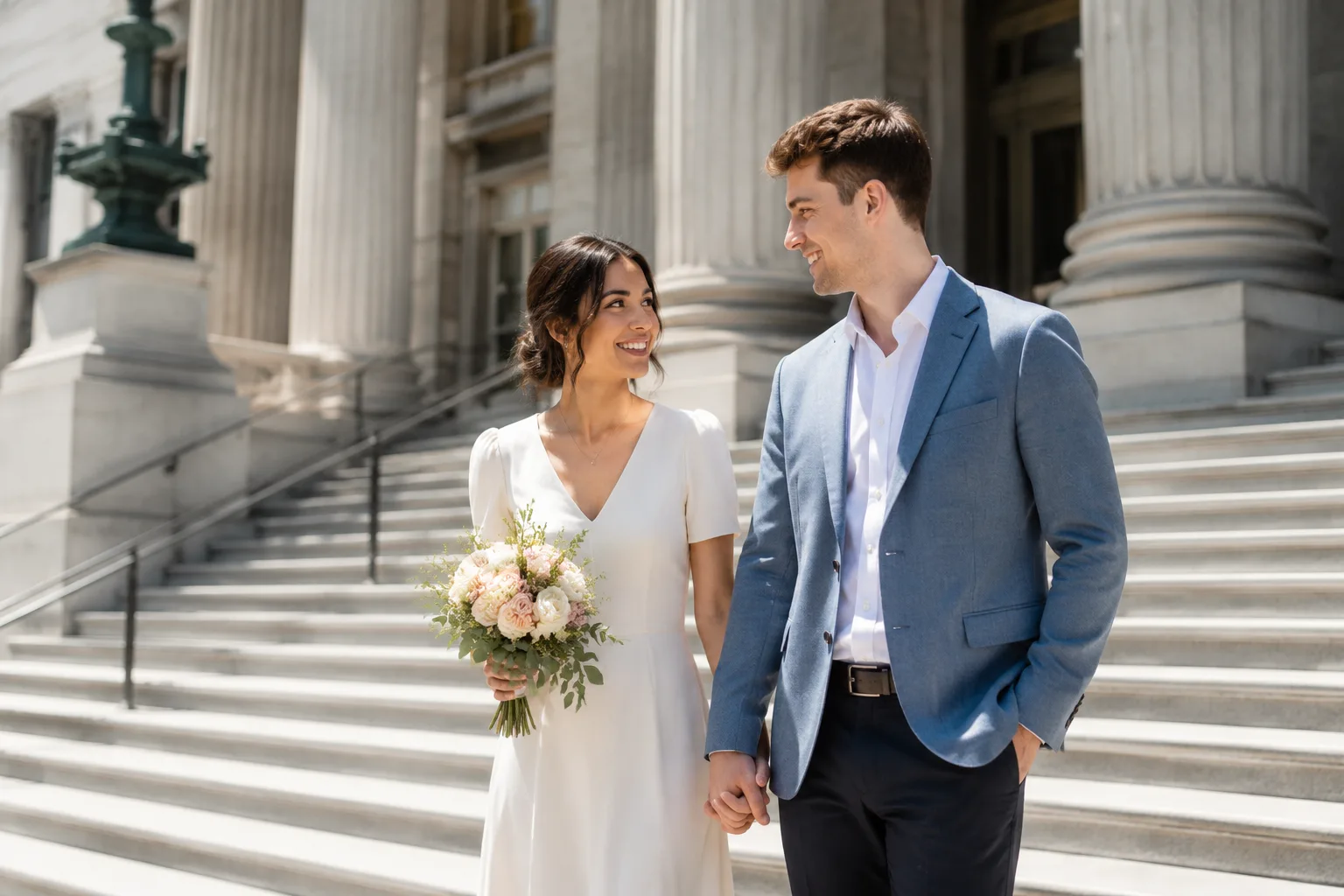
Courthouse Wedding Guide: How to Plan an Intimate Ceremony
A courthouse wedding strips the day down to what actually matters: two people, a legal signature, and the people closest to them. It is fast, affordable, and refreshingly low-stress compared to a full traditional wedding, which is exactly why more Georgia couples are choosing it as either their entire wedding or the legal first step before a larger celebration later. This guide walks through how courthouse weddings actually work in Georgia, what to expect on the day, and how to make an intimate ceremony still feel meaningful.
What Is a Courthouse Wedding, Exactly?
A courthouse wedding is a civil ceremony performed by a judge, magistrate, or other authorized officiant inside a county courthouse or probate court office. In Georgia, marriage licenses are issued by the probate court of the county where either partner resides, and many probate courts also perform brief ceremonies on-site the same day you pick up your license, for a small additional fee. Some couples treat this as their entire wedding; others use it purely to satisfy the legal requirement and hold a symbolic ceremony with a wedding officiant later.
Pros and Cons Compared to a Traditional Wedding
Courthouse weddings trade scale for simplicity. Understanding the trade-off helps you decide if it fits your vision.
- Cost: A courthouse ceremony typically costs a small fraction of a traditional wedding since there is no venue rental, catering minimum, or large guest list to fund.
- Timeline: You can often be legally married within days or weeks of deciding, rather than the 9-to-12-month planning window a full wedding requires.
- Guest list: Courthouse ceremonies are naturally small, often just the couple and one or two witnesses, which some couples love and others find they miss having their wider circle present for.
- Atmosphere: Courthouses are functional government buildings, not designed for romance, so the ceremony itself will feel brief and administrative rather than a curated experience.
How Courthouse Weddings Work in Georgia
The process is straightforward, but each county probate court sets its own hours, fees, and appointment rules, so confirm details with your specific county before showing up.
- Apply for your marriage license together. Both partners must appear in person at a Georgia probate court, present valid photo ID, and pay the license fee. Some counties offer a reduced fee for completing a premarital education course.
- Observe the waiting period. Georgia requires a brief waiting period between when the license is issued and when the ceremony can take place, so plan your date accordingly.
- Schedule the ceremony. Many probate courts, including several in Metro Atlanta, offer short in-house ceremonies performed by a judge or magistrate for an added fee. Others do not, so you would need to bring your own officiant.
- Bring your witnesses. Georgia requires at least one witness in addition to the officiant. Confirm your county's specific requirement beforehand.
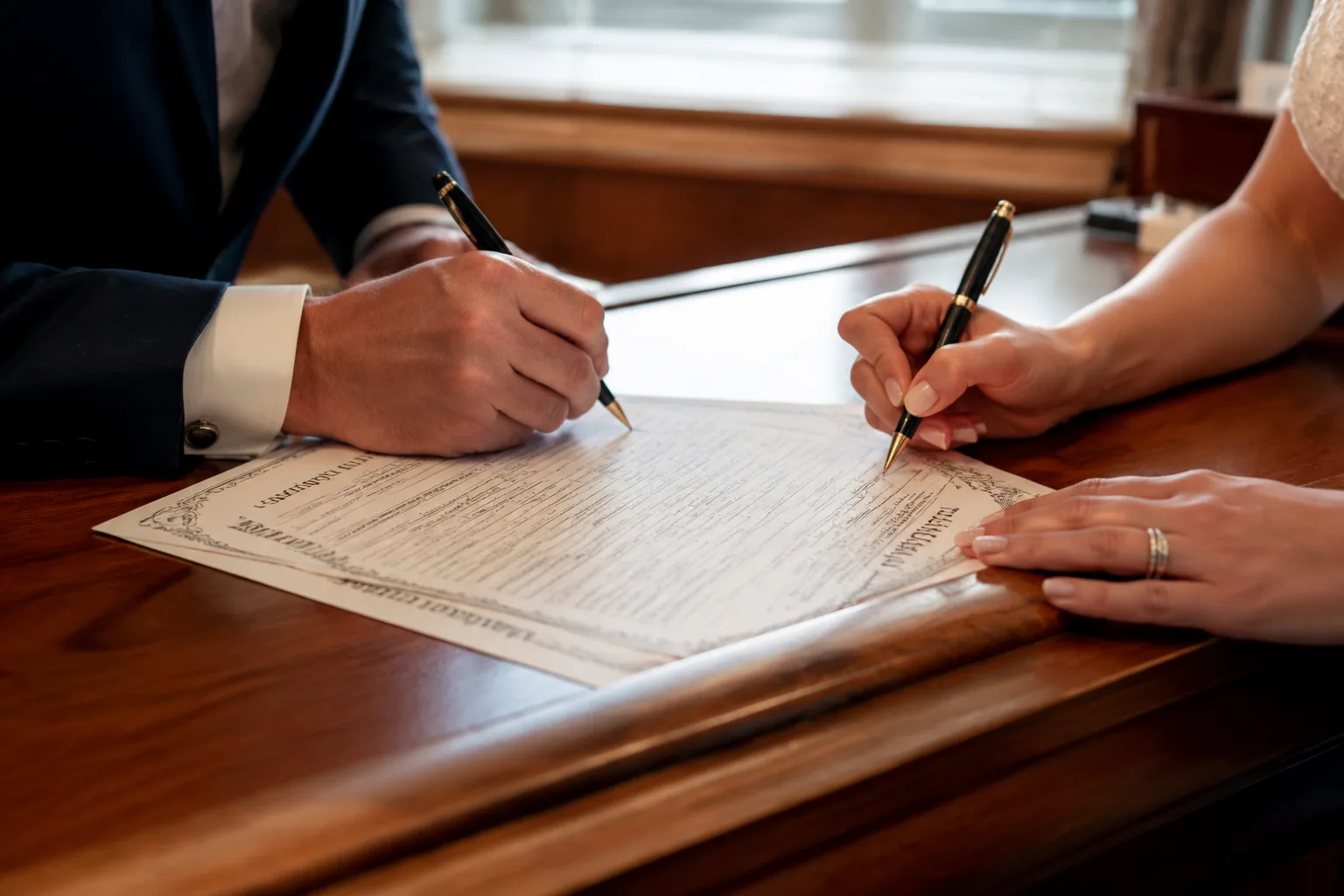
- Sign and return the license. After the ceremony, the officiant and witnesses sign the license, which is filed with the probate court to become your official marriage record.
Making an Intimate Ceremony Feel Meaningful
A courthouse wedding does not have to feel like a DMV visit. A few intentional touches go a long way.
- Dress up anyway. Wearing something you genuinely feel beautiful or sharp in, even a simple tea-length dress or a well-fitted suit, changes how the day feels in photos and in memory.
- Hire a photographer for an hour. Many photographers offer short "elopement" or courthouse packages that cover just the ceremony and a few portraits outside afterward.
- Bring a small bouquet or boutonniere. A simple, ready-made arrangement from a local florist adds color to photos without requiring full wedding-florist coordination.
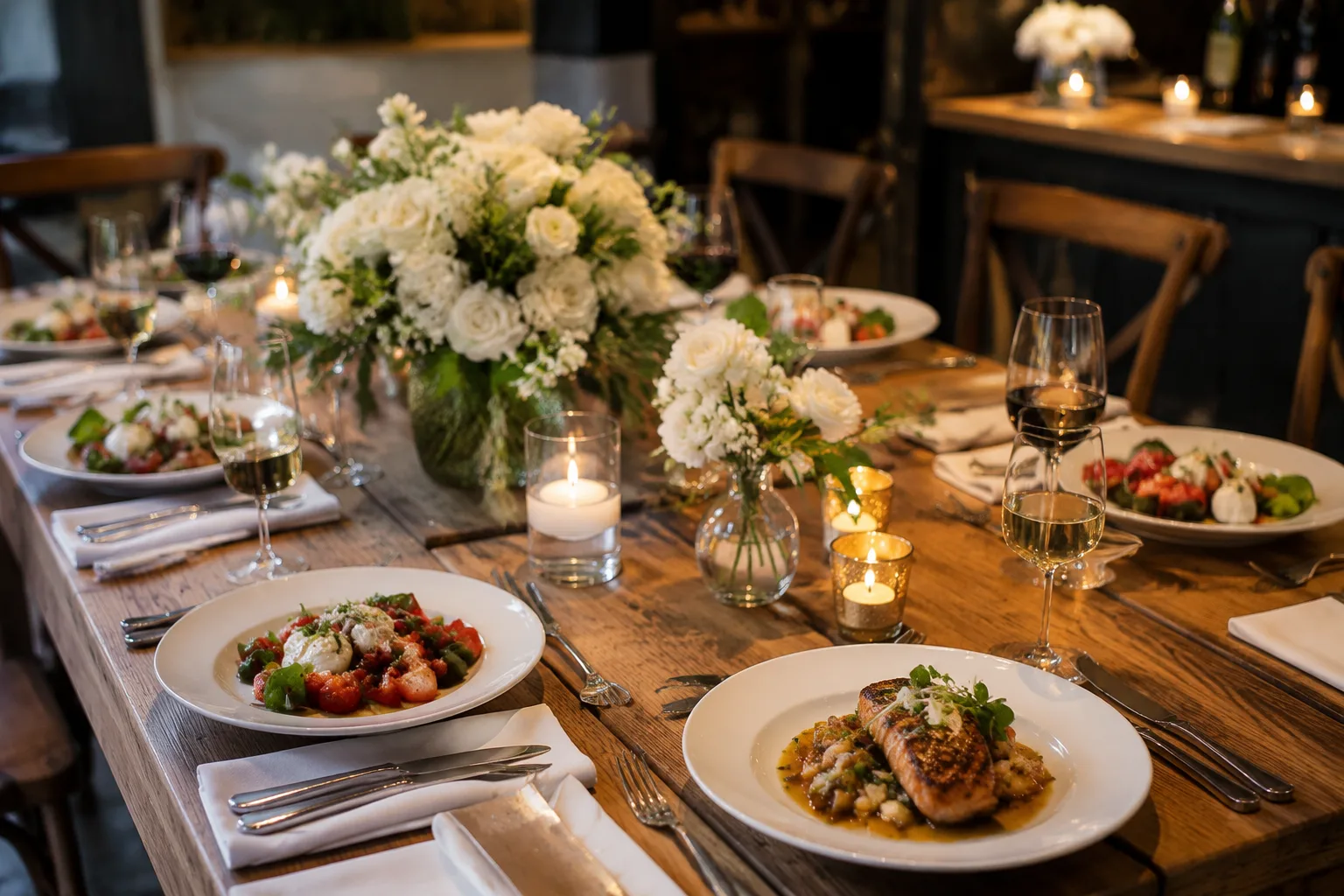
- Plan a celebration meal after. This is where most courthouse couples add the personal touch the ceremony itself lacks: a reserved table at a favorite restaurant, or a small catered gathering at home with close family. If you are planning a follow-up party for extended family later, our wedding catering team can build a relaxed menu for a post-courthouse reception, large or small.
What to Budget For
Even the simplest courthouse wedding has a few line items worth planning for: the marriage license fee, an optional in-house ceremony fee, outfits, a bouquet or boutonniere, a photographer if you hire one, and a celebration meal afterward. Because there is no venue or large catering minimum to cover, most of what you spend goes directly toward things that make the day feel special rather than toward logistics.
Courthouse Wedding Checklist
- Confirm your county probate court's hours, fees, and whether they perform in-house ceremonies.
- Gather valid photo ID for both partners and any required documents (like a certified divorce decree, if applicable).
- Apply for your license in person together and note the waiting period before you can marry.
- Line up your witness (or witnesses) and confirm they can attend on your scheduled date.
- Decide on attire, flowers, and whether you want a photographer present.
- Plan a small celebration afterward, whether that is dinner out or a catered gathering at home.
Frequently Asked Questions
Can anyone attend a courthouse wedding ceremony?
It depends on the county. Some ceremony rooms are small and limit attendance to the couple and witnesses, while others allow a few guests to observe. Call ahead to confirm the court's policy.
Do we need our own officiant for a courthouse wedding?
Not necessarily. Many Georgia probate courts have a judge or magistrate available on-site for an additional fee. If your county does not offer this, you can bring your own wedding officiant, as long as they are legally authorized to solemnize marriages in Georgia.
How much does a courthouse wedding cost in Georgia?
Costs vary by county, but the core expenses are the marriage license fee and, if you use it, the in-house ceremony fee, both modest compared to a traditional venue and reception. Total cost mostly depends on optional extras like photography and a celebration meal afterward.
Can we still have a big reception later if we marry at the courthouse first?
Yes, and many couples do exactly this. The courthouse ceremony satisfies the legal requirement, freeing you to plan a larger celebration or reception on your own timeline since you are already legally married.
What should we wear to a courthouse wedding?
There is no strict dress code, but most couples choose something a step above everyday clothing, like a cocktail dress or a suit. Comfort matters too, since you may be walking through a government building.
Is a courthouse wedding legally the same as a traditional wedding?
Yes. Once your marriage license is signed and filed with the probate court, you are legally married with the same rights and status as a couple married in a church or at a large venue.
Plan Your Celebration Around It
Maybe the courthouse is your entire wedding, or maybe it's just the first legal step before a bigger party down the road. Either way, the moment still deserves a proper celebration. If you are planning a reception, anniversary party, or family gathering to mark the occasion, contact our event coordinators to talk through a menu that fits the size and feel of your celebration.