· Atlanta Catering Events Team
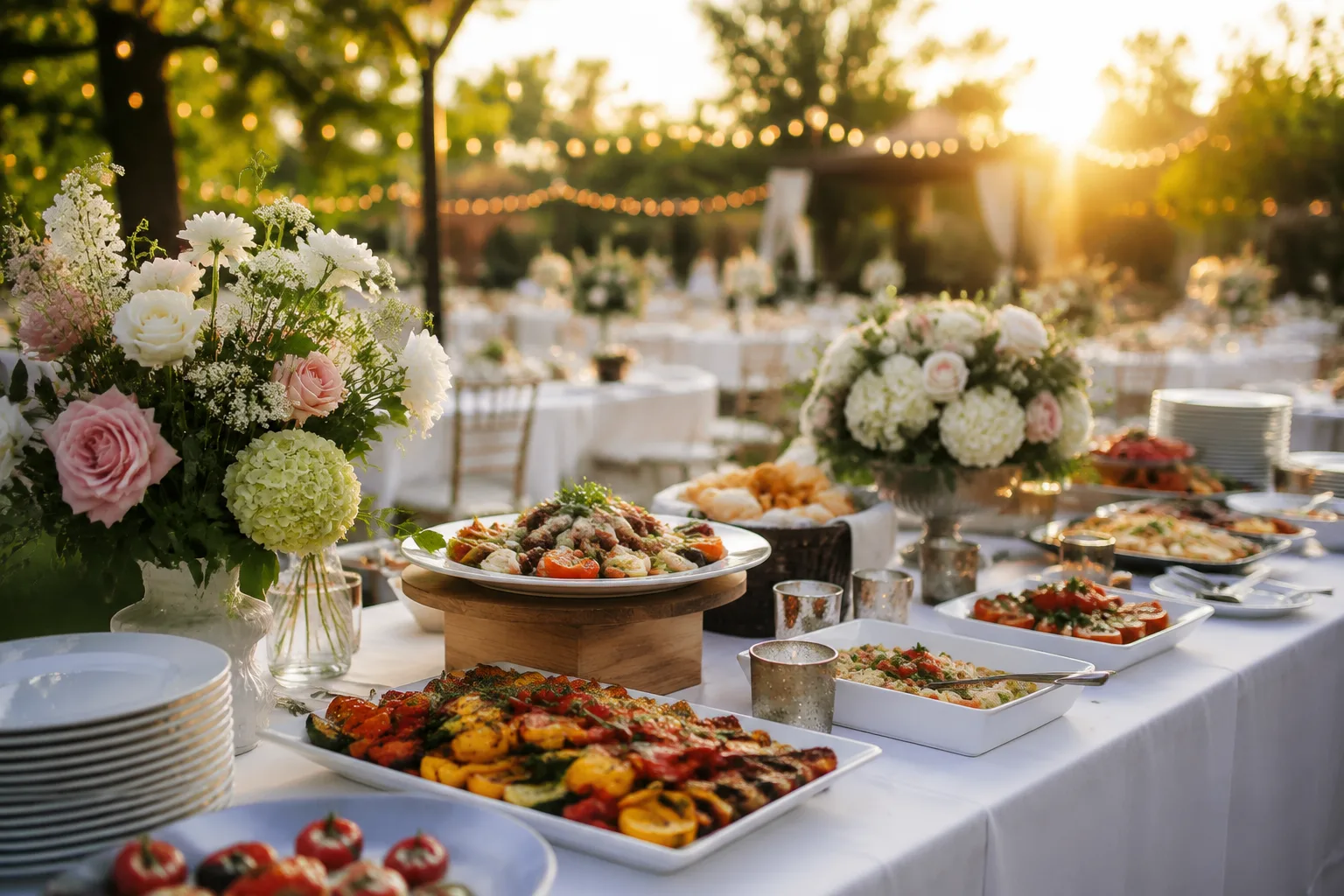
The Wedding Catering Planning Guide: Your Complete Roadmap
Your wedding reception is the centerpiece of your celebration, and the food, drinks, and hospitality service set its tone. It's where your family and friends gather to toast your future, share laughs, and dine together. Because dining is such a social, emotional part of a wedding, planning your catering is one of the most rewarding parts of the process too.
To help you get there with less stress, the planning team at Atlanta Catering Events put together this wedding catering planning guide. It works for an intimate backyard micro wedding in Sandy Springs just as well as a fuller celebration of up to 75 guests in Buckhead, walking you through budgets, timelines, tastings, and venue logistics step by step.
Table of Contents
- Step 1: Constructing Your Master Catering Budget
- Step 2: Choosing Your Perfect Service Style
- Step 3: Menu Engineering and Protein Balancing
- Step 4: Designing Your Custom Beverage and Bar Program
- Step 5: Your Chronological Catering Timeline
- Step 6: Mastering Venue Logistics and Walkthroughs
- Step 7: RSVPs, Headcounts, and Seating Charts
- The Wedding Catering Master Matrix
- Frequently Asked Questions
- Conclusion: Plan Your Perfect Feast with Atlanta Catering Events
Step 1: Constructing Your Master Catering Budget
To establish a secure financial plan, avoid starting with random per-person guesses. Instead, follow a top-down approach:
- Establish Your Overall Wedding Limit: Determine your absolute maximum wedding investment.
- Allocate the Catering Percentage: Set aside 40% to 45% of that total specifically for food, beverage, service staff, tax, and tableware rentals.
- Determine Your Max Guest Count: Divide that allocated catering fund by your estimated guest list count (up to 75 guests for an event our size). This will yield your target "All-Inclusive Per-Person Budget." Exact cost depends on your guest count, menu, and service style, so reach out for a custom quote.
Step 2: Choosing Your Perfect Service Style
The layout of your dining room shapes how your guests interact with one another. Here are the four main configurations to choose from:
- Plated Dinner: The classic, formal choice. Guests stay seated while servers deliver coordinated courses. This format keeps things structured and lets you coordinate speeches and parent dances precisely.
- Buffet: A great choice for variety. It promotes a relaxed, social atmosphere, accommodates varied dietary needs with ease, and lets guests choose from a good range of dishes.
- Interactive Stations: Scatter multiple themed food stations around the room (a live carving station, a grits bar, or a slider counter). This gets guests moving and mingling.
- Family-Style: Servers place large platters of food directly in the center of guest tables. This combines some of the structure of plated service with the cozy, communal feel of a family dinner.
Step 3: Menu Engineering and Protein Balancing
A successful menu offers a beautiful variety of textures, colors, and temperatures. If your main entree is rich and heavy (like a slow-braised beef short rib), pair it with a light, crisp vegetable (like wok-tossed baby bok choy) and a smooth, comforting starch (like garlic-whipped potatoes). Ensure you have substantial, thoughtfully prepared, and flavor-packed dishes for all dietary profiles (Gluten-Free, Vegan, Vegetarian, Allergen-Free) so every guest feels nurtured.
"A great menu has rhythm. It starts with light, crisp flavors during cocktail hour, builds to rich and complex notes during the main dinner, and wraps up with sweet, comforting finishes."
Atlanta Catering Events Team
Step 4: Designing Your Custom Beverage and Bar Program
A good meal deserves drinks that hold their own. Select wines that complement your main courses, such as a rich Cabernet Sauvignon with beef, or a crisp Sauvignon Blanc with seared fish. It's also worth working with your caterer on one or two signature cocktails built around your favorite spirits and fresh local garnishes.
Step 5: Your Chronological Catering Timeline
Keep your menu planning on track with this standard timeline:
- 9 - 12 Months: Book your caterer and submit your deposit to lock in your date securely.
- 3 - 6 Months: Host your private tasting session, sample dishes, and lock in menu courses.
- 2 Months: Conduct your on-site venue walkthrough to finalize power, layout, and tableware rentals.
- 2 Weeks: Submit final guaranteed headcount, guest allergy spreadsheets, and final payment.
Step 6: Mastering Venue Logistics and Walkthroughs
Unlike indoor venues with fully equipped kitchens, outdoor settings or empty lofts often require your caterer to build a fully functioning "field kitchen" from scratch. This behind-the-scenes operation is what makes your dinner possible. Meet with your caterer, venue manager, and wedding planner on-site to walk the space and finalize power requirements, potable water access, trash containment, and setup spaces.
Step 7: RSVPs, Headcounts, and Seating Charts
As guest responses arrive, compile your data tightly to avoid overpaying or underestimating your food supplies. Submit a detailed spreadsheet to your caterer listing table numbers, guest names, specific allergies, and vendor meals. This ensures that servers can deliver dedicated allergy-safe plates directly to the correct seats without any confusion.
The Wedding Catering Master Matrix
| Planning Step | Key Focus Areas | Main Goal & Deliverable |
|---|---|---|
| Step 1: Budget | Catering allocation (40-45% of total budget) | Establish a clear, all-inclusive cost per head |
| Step 2: Service | Plated, Buffet, Stations, or Family-Style | Select format that matches your theme and layout |
| Step 3: Menu | Protein balance & dietary inclusion | Lock in balanced courses and dedicated vegan plates |
| Step 4: Bar | Wine, beer, and signature cocktails | Curate drinks that complement your food courses |
| Step 5: Logistics | Power, water, and kitchen walkthroughs | Ensure smooth back-of-house operations on-site |
Frequently Asked Questions
1. Is the tasting session free?
Many caterers charge a nominal fee for tasting sessions, which is then fully credited toward your account balance once you sign your wedding contract.
2. Can a caterer customize dishes for severe peanut allergies?
Yes. Experienced caterers operate under strict kitchen safety and sanitization protocols, fully preventing cross-contamination to ensure every guest stays safe.
3. Why is there a service charge on our catering invoice?
The service charge (typically 18% to 24%) covers general liability insurance, event coordination, backend administration, kitchen transport, and culinary labor.
4. Can we bring our own alcohol to save money?
Some venues allow you to purchase your own alcohol. You can then hire a licensed, insured caterer like Atlanta Catering Events to provide the certified bartenders and mixers.
5. When is our final guest headcount due?
For most Atlanta catering companies, your final, unalterable guaranteed guest count is due exactly 10 to 14 days before your wedding reception.
6. What is a cake-cutting fee?
A cake-cutting fee is a small labor charge applied by some caterers to cover slicing and plating your wedding cake. Atlanta Catering Events always strives to keep these fees transparent and affordable.
7. How many servers do we need for a 75-guest wedding?
For a formal plated dinner, you should have at least 4 to 6 servers. For a buffet, 2 to 3 servers are sufficient to manage food lines and clear plates.
8. Does Atlanta Catering Events serve areas outside of Atlanta proper?
Yes, we serve the entire surrounding metro region, including Sandy Springs, Marietta, Roswell, Alpharetta, Johns Creek, Duluth, Peachtree Corners, Dunwoody, Smyrna, and Decatur.
9. Can we box up leftover wedding food?
To comply with local health department safety guidelines, leftovers that have sat out on a buffet line cannot be safely packaged. However, extra food held securely in the kitchen can often be packed.
10. Why is a venue walkthrough necessary?
A walkthrough allows your caterer to map out their field kitchen, electrical outlets, and dining room flows, ensuring a flawless, stress-free setup.
Plan Your Reception with Atlanta Catering Events
At Atlanta Catering Events, we put real care into every plate, because the food should tell your story too. From your initial budget breakdown to the final, late-night departure, we bring strong cooking, responsive communication, and honest service to every event across Metro Atlanta.
Ready to start planning your wedding reception dining experience? Contact our event coordinators for a custom proposal.