· Atlanta Catering Events Team
Choosing Your Wedding Flowers: A Seasonal Guide for Georgia Weddings
Flowers are one of the fastest ways to blow past a wedding budget if you're not paying attention to seasonality. Georgia's growing seasons offer beautiful, abundant options nearly year-round, but choosing blooms that are in season for your wedding date, rather than fighting against it, is the single biggest lever for both cost and visual impact. This guide walks through what grows well by season and how to think about your floral plan alongside your venue and overall design.
Table of Contents
- Why Seasonality Matters
- Spring Blooms
- Summer Blooms
- Fall Blooms
- Winter Blooms
- Budget Strategy for Florals
- Frequently Asked Questions
Why Seasonality Matters
Out-of-season flowers have to be flown in from other growing regions, which drives up cost and limits your florist's flexibility on last-minute design changes. In-season, regionally available blooms are typically fresher, more cost-effective, and pair naturally with the color palette that season already offers. Working with your florist's seasonal availability, rather than starting from a rigid Pinterest board of a specific out-of-season flower, generally produces both a better-looking and more affordable result.
Spring Blooms (March–May)
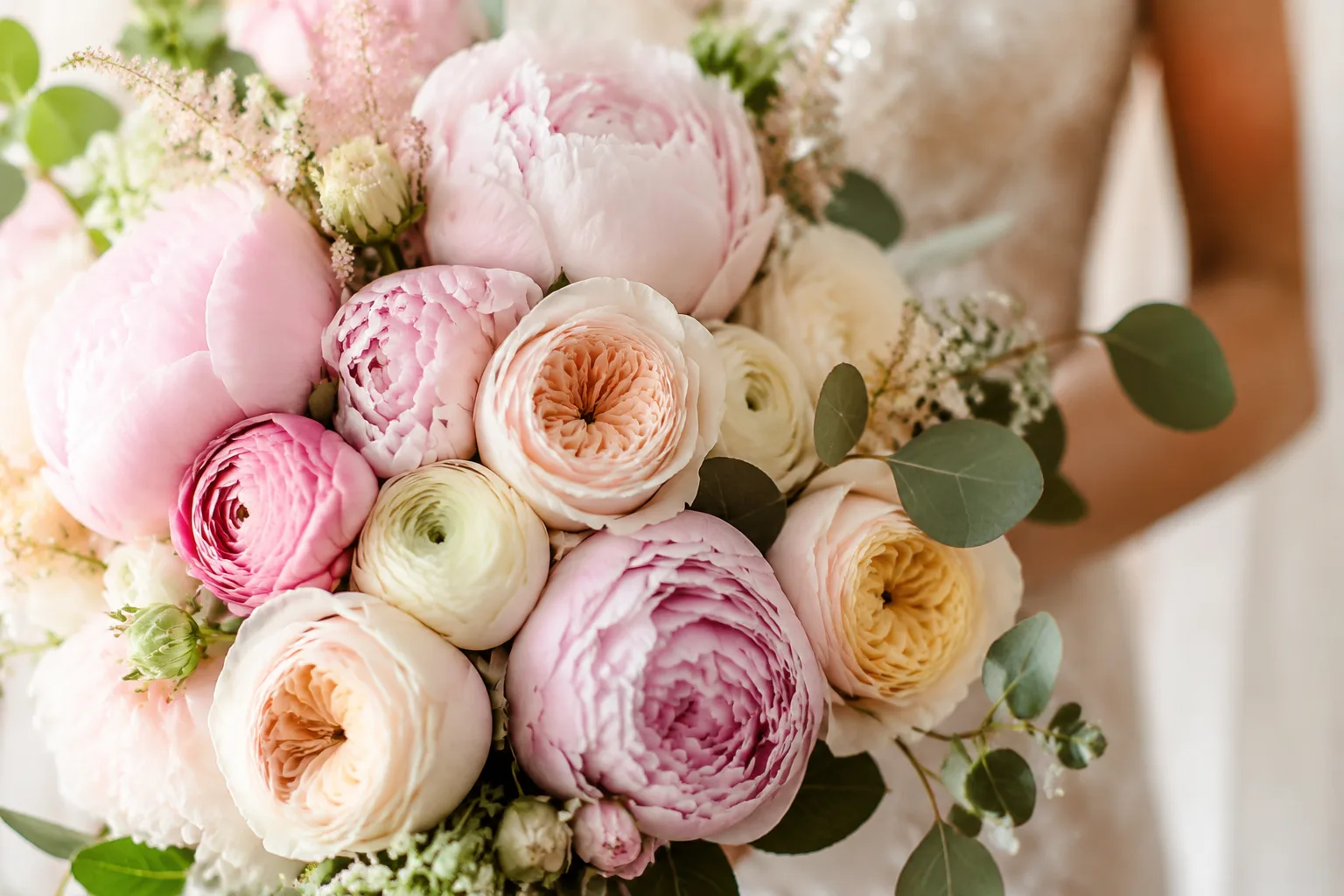
Spring is peak wedding season in Georgia for good reason, and the floral options reflect that abundance: peonies, ranunculus, sweet peas, tulips, and garden roses are all widely available and pair beautifully with Georgia's blooming dogwood and azalea landscape. Soft pastels and romantic garden-style arrangements are especially popular this time of year, and outdoor garden venues need minimal additional floral installation since the natural landscape does much of the work.
Summer Blooms (June–August)
Summer offers heat-hardy options like dahlias, zinnias, sunflowers, hydrangeas, and garden roses, along with lush greenery that holds up well in Georgia's humidity. Because summer heat can be tough on delicate blooms during long outdoor receptions, it's worth discussing with your florist which varieties will hold their shape and color through several hours outdoors, and building in a plan for keeping arrangements cool and hydrated before the ceremony.
Fall Blooms (September–November)
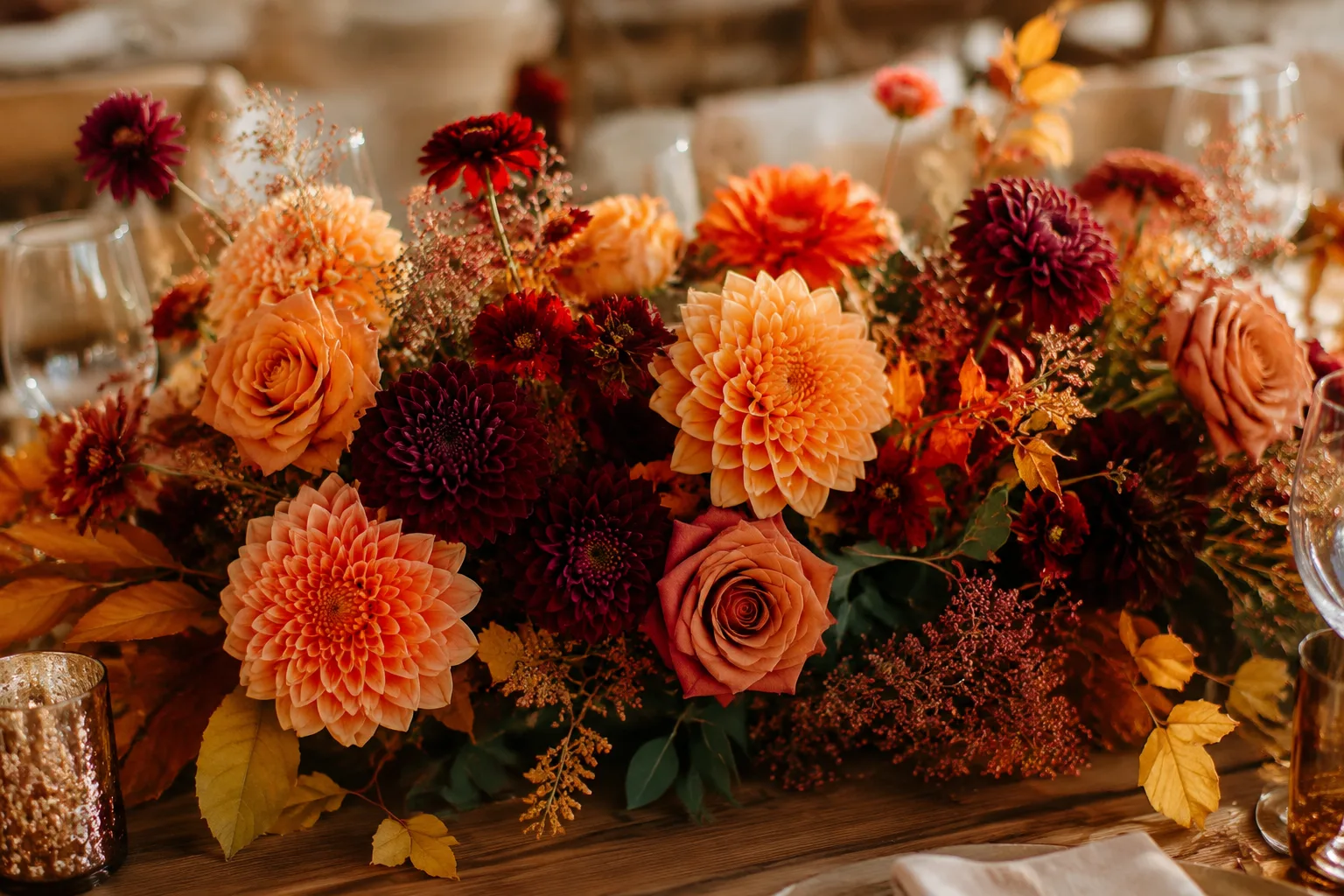
Fall is the other major Georgia wedding season, and florals lean into warm, rich tones: dahlias, chrysanthemums, marigolds, and late-season garden roses in deep oranges, burgundies, and golds. Combined with foliage, seeded eucalyptus, and other textural greenery, fall arrangements tend to feel abundant and layered, and pair especially well with outdoor venues showing off autumn color.
Winter Blooms (December–February)
Winter florals in Georgia lean on hardier, more structural options: amaryllis, anemones, ranunculus, and evergreen greenery like cedar and eucalyptus, often combined with candles and richer textures (velvet ribbon, dried elements) to compensate for a smaller pool of fresh local blooms. Winter weddings can actually offer some cost savings on florals precisely because demand is lower, even though a slightly wider share of blooms may need to be sourced from outside the immediate region.
Budget Strategy for Florals
- Prioritize where flowers matter most visually. The bridal bouquet and ceremony backdrop typically get the most camera time, so it's reasonable to allocate more budget there and simplify elsewhere.
- Repurpose ceremony flowers at the reception. Large arrangements framing your ceremony space can often be moved to the reception entrance or head table afterward, effectively doubling their use.
- Lean on greenery. Foliage-heavy arrangements with fewer, more strategic blooms cost less than dense, all-flower designs while still looking lush and intentional.
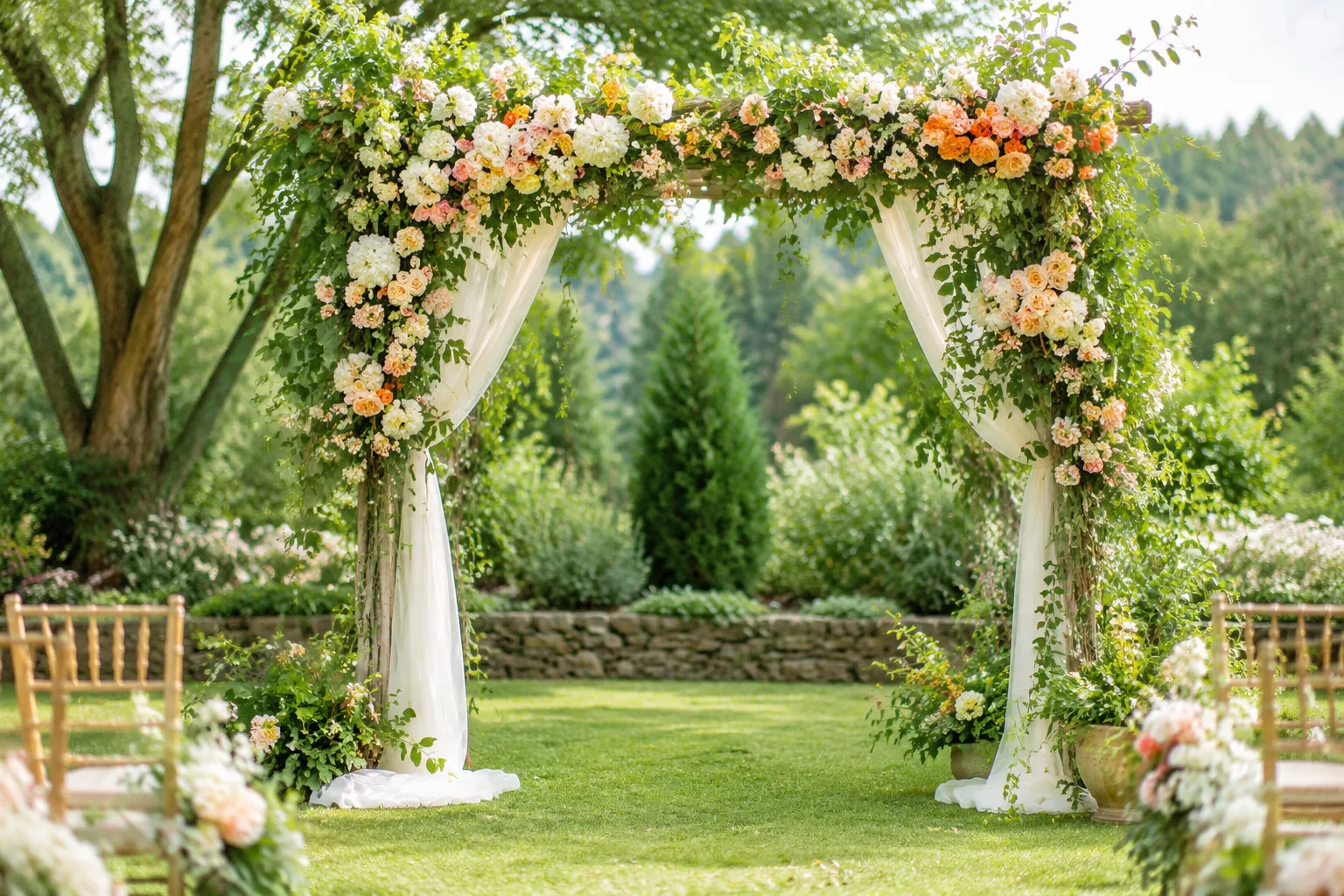
- Choose a venue with built-in beauty. A garden or estate venue with mature landscaping reduces how much floral installation you need to create a finished look.
Floral choices often set the color palette and overall design tone that carries through the rest of your reception, including table settings and food presentation. Our team regularly coordinates with couples and their florists to make sure the catering presentation (linens, plating style, and dessert displays) complements the floral design rather than clashing with it. Learn more about our wedding catering services, or explore preferred venues known for beautiful natural settings that pair well with seasonal florals.
Frequently Asked Questions
What flowers are most affordable for a Georgia wedding?
In-season, locally available blooms are almost always more affordable than out-of-season imported flowers. Ask your florist which flowers are naturally at peak availability for your specific wedding month.
How far in advance should we book a florist?
Book your florist 6 to 9 months before the wedding, especially for peak spring and fall dates, since popular florists' calendars fill up alongside venues and photographers.
Can ceremony flowers be reused at the reception?
Yes, and it's a common budget strategy. Ask your florist to design ceremony arrangements with reception repurposing in mind from the start, so the transition looks intentional rather than mismatched.
What flowers hold up best in Georgia summer heat?
Heat-tolerant varieties like zinnias, dahlias, sunflowers, and hydrangeas tend to hold their shape and color better through a long outdoor summer reception than more delicate blooms like peonies.
Do we need fewer flowers if we choose a garden or estate venue?
Often, yes. Venues with mature natural landscaping provide a lot of built-in visual interest, which can let you focus your floral budget on key pieces like the bouquet and centerpieces rather than large-scale installation.
Should our floral colors match our catering presentation?
It's worth coordinating the two. Sharing your floral and color palette with your caterer ahead of time helps ensure linens, plating, and dessert displays feel like part of one cohesive design rather than competing elements.