· Atlanta Catering Events Team
Wedding Invitation Wording Ideas and Etiquette
Invitation wording seems like it should be simple, until you're staring at a blank template trying to figure out how to word a blended-family hosting line, whether to spell out your wedding date, or how formal your language needs to be. This guide covers the core wording structure, common variations for different hosting situations, and the etiquette details that trip couples up most often.
Table of Contents
- The Core Invitation Structure
- Wording for Different Hosting Situations
- Formal vs. Casual Tone
- RSVP Card and Details Card Wording
- Common Wording Mistakes
- Frequently Asked Questions
The Core Invitation Structure
Most wedding invitations follow a consistent structure, even when the exact wording varies:
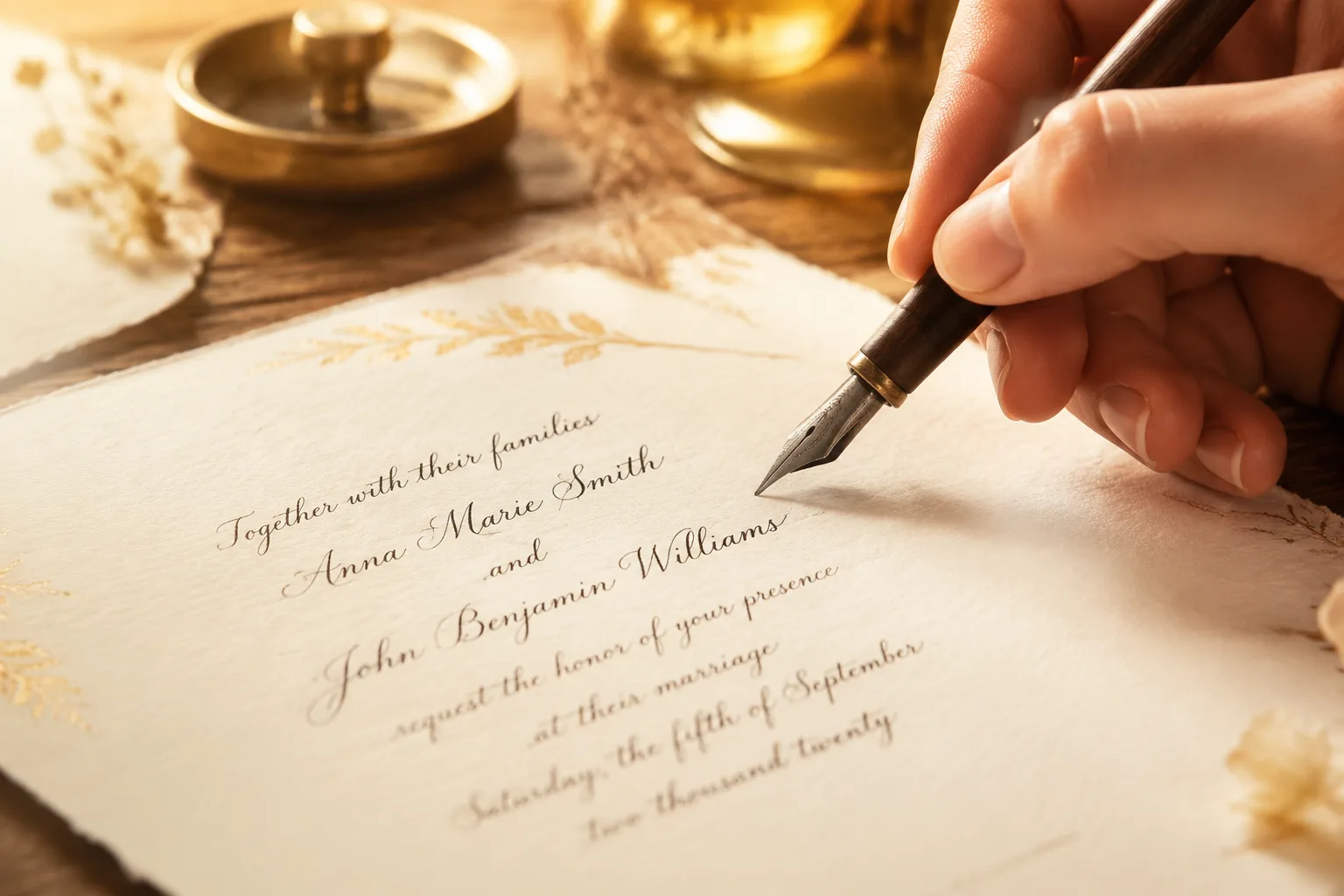
- Host line: Who is issuing the invitation (parents, the couple themselves, or both).
- Request line: The formal request to attend, e.g., "request the pleasure of your company" or "invite you to celebrate."
- Couple's names.
- Date and time.
- Location.
- Reception details (if held at the same location, or a note that reception details are on a separate card).
Wording for Different Hosting Situations
When the Couple is Hosting
"Together with their families, [Name] and [Name] request the pleasure of your company at their wedding..." This wording is increasingly common and neatly sidesteps the question of who is financially hosting, which many modern couples split among partners and both sets of parents.
When One Set of Parents is Hosting
"Mr. and Mrs. [Parent Names] request the honor of your presence at the marriage of their daughter [Name] to [Partner Name]..." Adjust the relationship language for sons, and use "the pleasure of your company" instead of "the honor of your presence" if the ceremony isn't in a house of worship (a traditional but increasingly relaxed etiquette distinction).
When Both Sets of Parents are Hosting Jointly
"Mr. and Mrs. [Parent Names] and Mr. and Mrs. [Parent Names] request the pleasure of your company at the marriage of their children, [Name] and [Name]..." This wording treats both families equally, which many couples with divorced or blended families appreciate.
For Blended or Divorced Families
There's no single "correct" formula here. The priority is that every contributing or significant parent feels acknowledged in a way that reflects your actual family relationships. A common approach lists each parent by name on their own line without needing to explain marital status, or simply defaults to the couple-hosted wording to avoid the question altogether.
Formal vs. Casual Tone
Traditional formal wording spells out numbers and dates in full ("the fourth of October, two thousand twenty-six") and avoids abbreviations. Casual invitations can use numerals and more conversational language ("Join us as we tie the knot on October 4, 2026"). Choose the tone that matches your venue and overall wedding style: a formal ballroom wedding generally calls for traditional formal wording, while a casual backyard or barn wedding gives you more room for personality and informal language.
RSVP Card and Details Card Wording
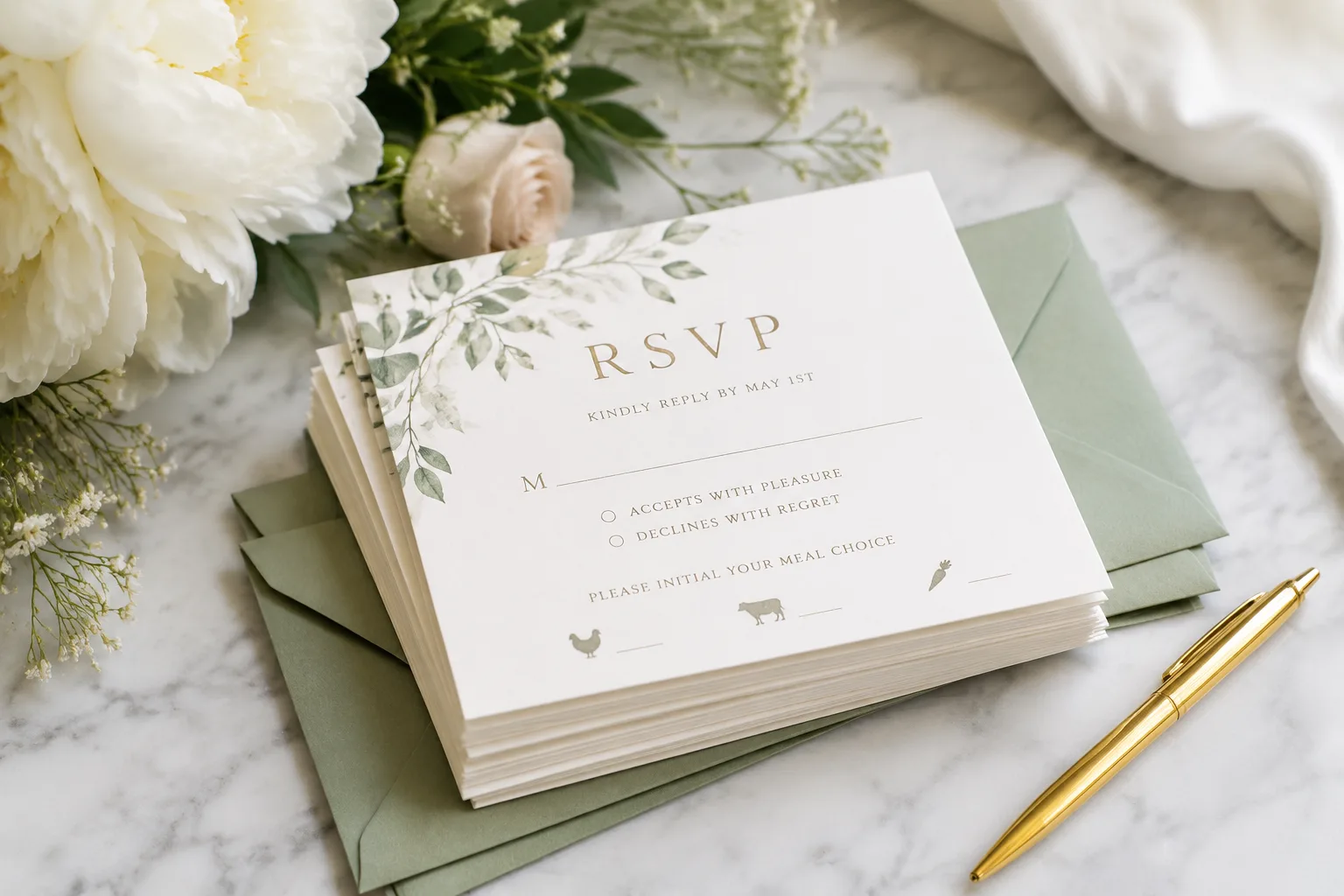
Keep RSVP cards simple and clear: a line for the guest's name, a check-box or fill-in-the-blank for attendance, and, if relevant, a meal selection or dietary restriction line ("Please note any dietary restrictions: ____"). This last detail matters more than couples often realize. Collecting allergy and dietary information directly on the RSVP card gives your caterer accurate information well ahead of the final headcount deadline, rather than trying to track it down guest by guest closer to the big day.
A separate details card (or a dedicated page on your wedding website) is the right place for information like dress code, hotel blocks, transportation, and registry details, and it keeps the main invitation itself focused on the core who/what/when/where.
Common Wording Mistakes
- Inconsistent formality across pieces (a formal main invitation paired with a casually-worded RSVP card can feel disjointed).
- Forgetting a dietary restrictions line on the RSVP, which creates extra work tracking this information down later.
- Omitting reception details when the reception is at a different location or time than the ceremony.
- Not proofreading names and dates carefully. Once printed, wording errors are expensive and slow to fix, so have multiple people review the final proof before it goes to print.
Whatever wording style you choose, make sure the invitation gives guests (and eventually your caterer) the information needed to plan accurately, especially around dietary needs and headcount. For more on how that information flows into your catering plan, see our wedding catering timeline guide, or explore our wedding catering services directly.
Frequently Asked Questions
Should we spell out numbers and dates on formal invitations?
Traditional formal etiquette spells out dates and times in full rather than using numerals, though many modern couples relax this rule, especially for semi-formal or casual weddings.
How do we word an invitation for divorced parents who are both contributing?
List each parent on their own line without needing to explain their marital status, or use couple-hosted wording ("Together with their families...") to sidestep the question entirely. The goal is that every contributing parent feels genuinely acknowledged.
Should dietary restrictions be collected on the RSVP card?
Yes, this is strongly recommended. A simple line for guests to note allergies or dietary needs on the RSVP card gives your caterer accurate information well before the final headcount deadline.
When should wedding invitations be mailed?
Most couples mail formal invitations 6 to 8 weeks before the wedding date, giving guests enough time to respond and make any necessary travel arrangements.
Where should reception details go if the ceremony and reception are at different locations?
Include a separate reception card in the invitation suite, or clearly note "reception to follow at [location]" directly on the main invitation if space allows.
Is it okay to put registry information on the invitation?
Traditional etiquette advises against it. Registry details are better placed on your wedding website or shared informally through the wedding party and parents, not printed directly on the formal invitation.