· Atlanta Catering Events Team
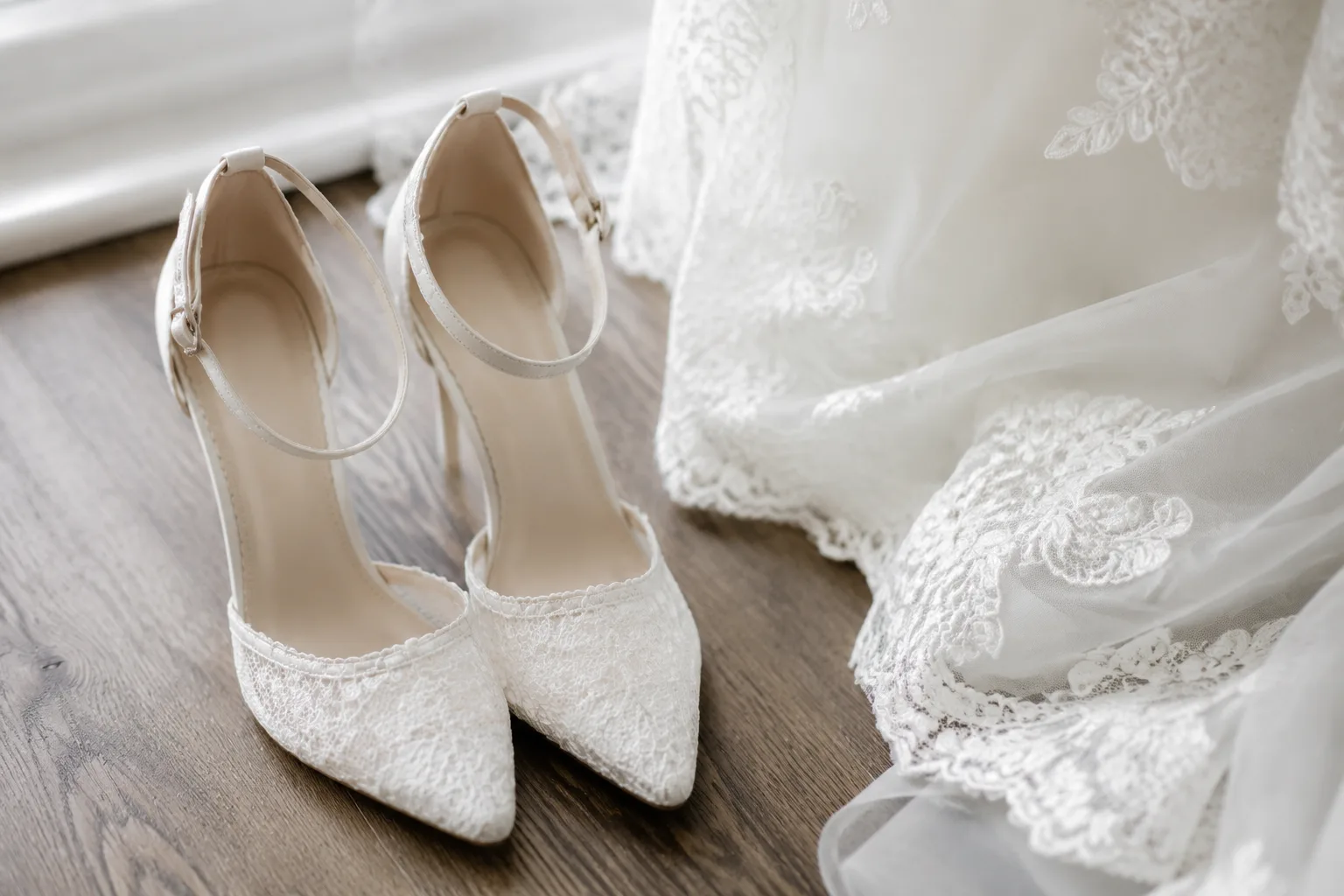
Wedding Shoes Guide: Comfort Meets Style
You'll spend more hours in your wedding shoes than in almost any other single garment or accessory that day, through photos, a ceremony, a reception, and very likely several hours of dancing. Yet shoes are often one of the last purchases couples make, sometimes bought in a rush the week before the wedding. This guide covers how to choose wedding shoes that hold up to a long day without sacrificing style.
Why Comfort Should Drive the Decision
A stunning shoe that becomes unbearable by hour three of the reception isn't actually serving you well, no matter how it photographs. Think honestly about your day: how much walking (across a venue, possibly outdoors on grass or gravel), how much standing (photos, the receiving line), and how much dancing you realistically expect. Prioritizing comfort doesn't mean giving up on style. It means being strategic about which style choices matter most to you.
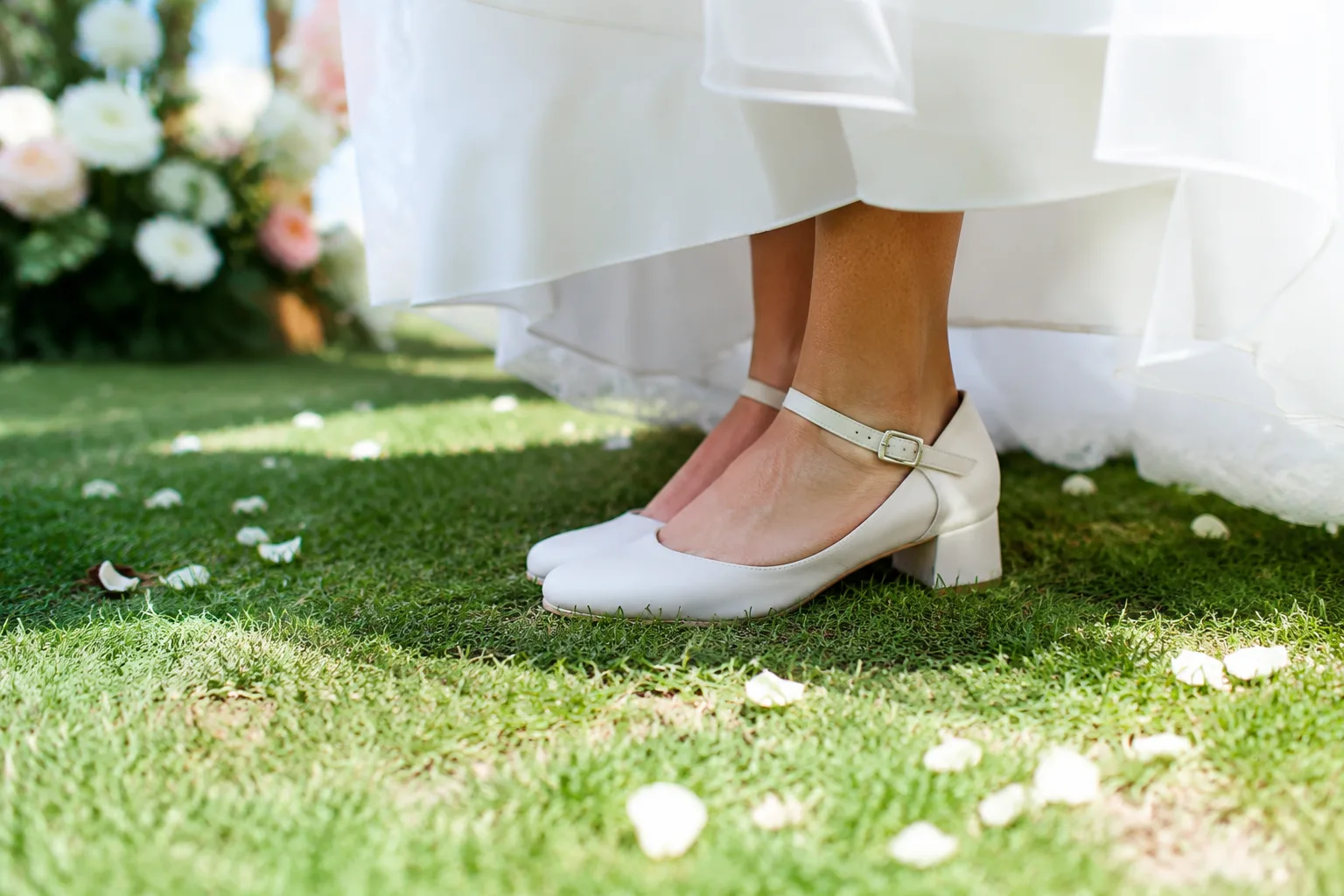
Shoe Options by Comfort Level
Block Heels and Wedges
A wider base distributes weight more evenly than a stiletto, making block heels and wedges a popular middle ground between height and stability. Wedges in particular are a strong choice for outdoor or garden ceremonies, since a wide sole is far less likely to sink into grass or soft ground than a thin heel.
Low or Kitten Heels
A lower heel height reduces strain on the balls of your feet over a long day, while still offering more formality than a flat. This is a common choice for brides who want some height without the fatigue of a traditional 3-4 inch heel.
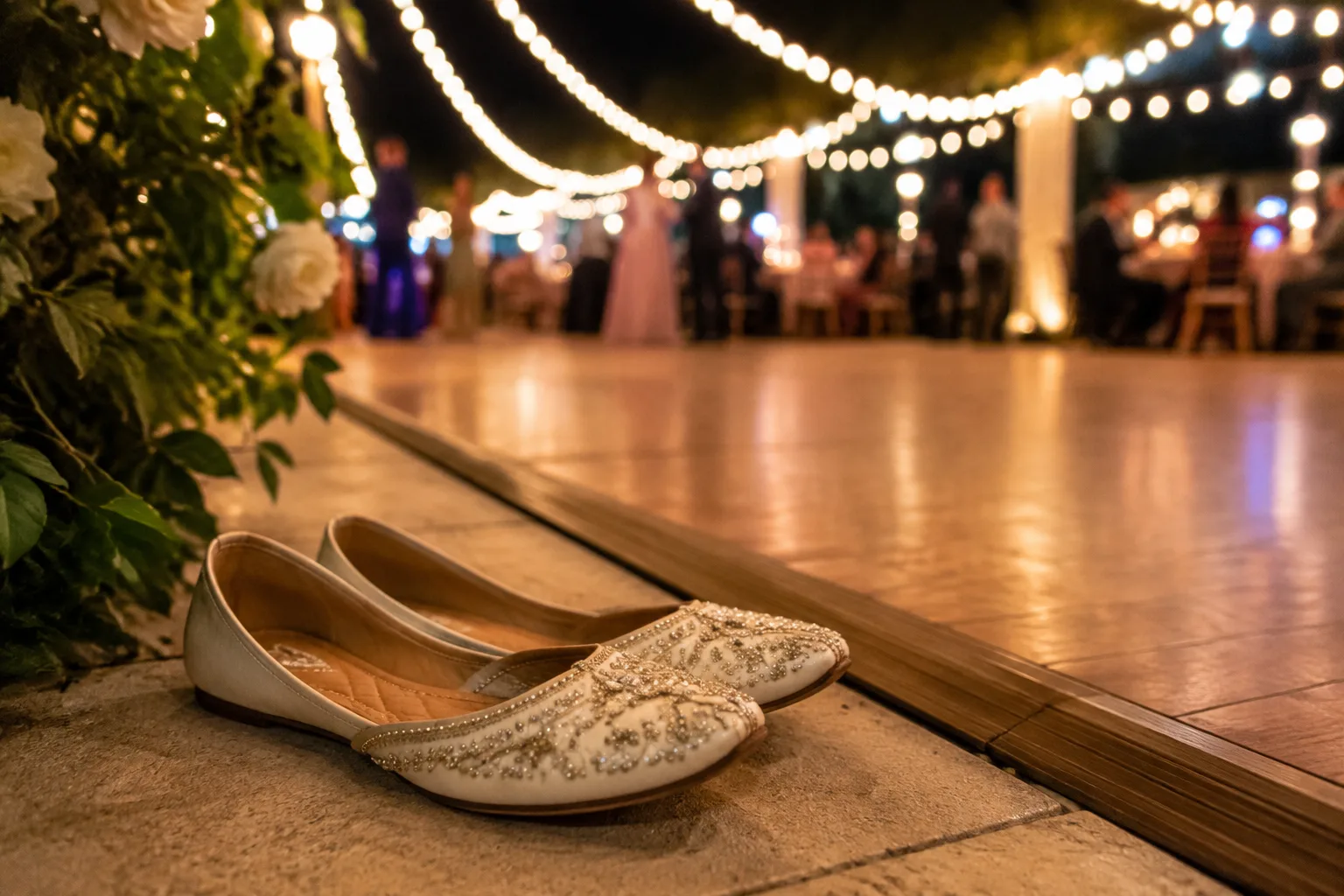
Flats and Embellished Flats
Bridal flats have come a long way from plain ballet styles. Many now feature lace, crystal embellishments, or metallic finishes that photograph just as elegantly as a heel. Flats are the most comfortable option for a full day of movement and are especially popular for outdoor or destination weddings.
Sneakers
Custom or dressed-up sneakers have become a legitimate reception option for brides who want to dance comfortably for hours, often worn as a shoe change after the ceremony and photos are done.
The Two-Shoe Strategy
One of the most practical approaches is to plan for two pairs: a photogenic pair for the ceremony and portraits, and a comfortable pair (flats or sneakers) for the reception once the dancing starts. This lets you have the exact aesthetic you want in photos without paying for it in foot pain by the end of the night.
Practical Tips Before the Big Day
- Break them in early. Wear new shoes around the house for short stretches in the weeks before the wedding, especially anything with a stiff sole or new leather.
- Match the shoe to the terrain. Outdoor venues with grass, gravel, or cobblestone call for a wider heel or a flat; indoor ballroom venues give you more flexibility.
- Bring blister protection. Adhesive bandages, moleskin, or gel inserts in your emergency kit can save a day if a new shoe starts rubbing.
- Consider the shoe with your dress hem. If your dress is being hemmed, do the final fitting in the actual wedding shoes so the length is accurate.
- Don't forget the wedding party. If you're coordinating bridesmaid or groomsman footwear, communicate comfort expectations early. A full reception on unfamiliar heels is a common complaint among wedding parties.
Shoes and Your Reception Timeline
If you know you'll want a shoe change, plan it into your reception timeline. Many brides swap right after the first dance or right before open dancing begins, so it doesn't interrupt a key photographed moment. For more on how key reception moments typically flow, see our guide to wedding reception timelines and traditions.
Focus on What Lasts the Whole Night
Just like your shoes need to hold up for the entire event, so does everything else about your reception, including the food and service. A well-paced catering plan keeps energy up for dancing rather than letting guests crash from a long, poorly timed meal. Learn more about wedding catering in Atlanta or reach out to our team to talk through your reception plans.
Frequently Asked Questions
Should I buy two pairs of wedding shoes?
It's a popular and practical strategy: one photogenic pair for the ceremony and portraits, and a more comfortable pair (flats or sneakers) for the reception once dancing begins.
What shoes work best for an outdoor wedding?
Wedges, block heels, or flats generally perform much better than thin stiletto heels on grass, gravel, or uneven ground, since a wider base is far less likely to sink or catch.
How far in advance should I buy my wedding shoes?
Buy them early enough to break them in gradually — at least a few weeks before the wedding — especially if they have a stiff sole or new leather that needs softening with wear.
When should I do my final dress hemming with my wedding shoes?
Bring your actual wedding shoes to your final dress fitting so the tailor can hem the length accurately. Changing shoe height after hemming can throw off how the dress falls.
Are sneakers acceptable for a wedding reception?
Yes, especially as a reception shoe change. Custom or dressed-up sneakers have become a common, comfortable option for brides who want to dance freely without foot pain.
What should I pack in case my shoes cause blisters?
Adhesive bandages, moleskin, or gel heel inserts are worth including in your wedding-day emergency kit, along with a backup pair of flats just in case.